
Doctors at Nanavati Max Hospital Successfully Replant Completely Amputated Foot of 30-Year-Old Railway Accident Victim, Give Him a Chance to Walk Again
Advanced microsurgery and multiple complex reconstructive procedures help salvage completely amputated limb with nearly nine hours of lack of blood supply

POSTED BY : ANAGHA SAKPAL DATED ON : 17/11/2026 (9004379946)
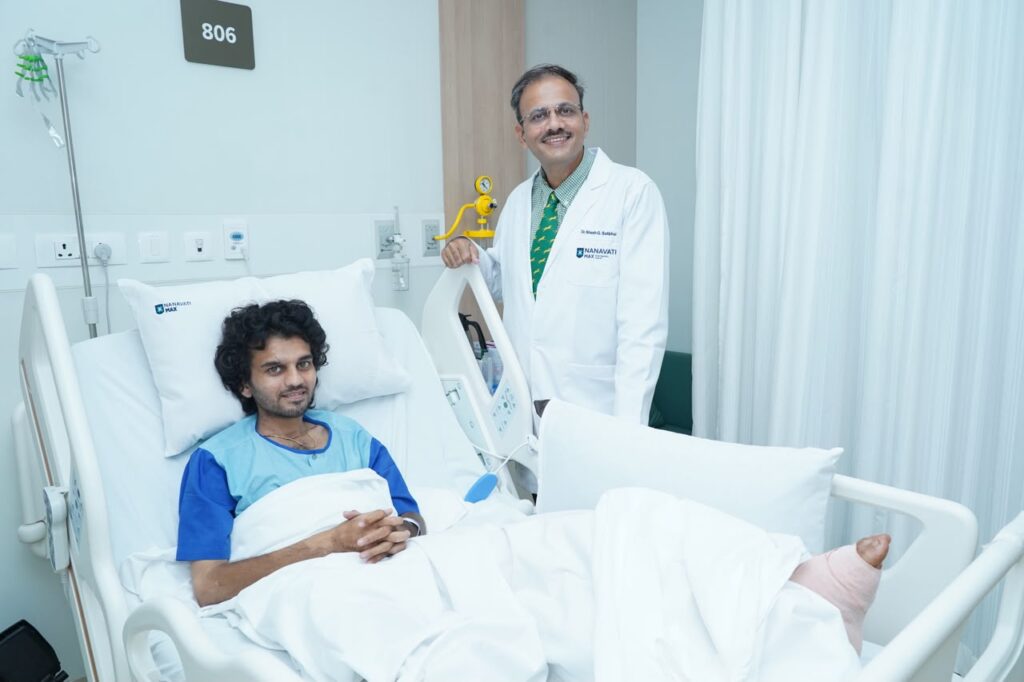
Mumbai (RMN) : When 30-year-old Ronak Bhuptani fell from a moving local train near Kandivali station, his left foot was crushed and completely amputated after getting trapped under the train’s wheels. Following initial treatment at two hospitals, his family was told that the injured limb could not be salvaged and that he would need further amputation and a prosthetic limb. However, a timely intervention by his spiritual guide led the family to Nanavati Max Super Speciality Hospital, Mumbai, where doctors successfully replanted his amputated foot and restored blood circulation after approximately nine hours of complete absence of blood supply. This was followed by multiple complex reconstructive procedures to repair extensive tissue damage, stabilise the foot and give the patient an opportunity to regain mobility.
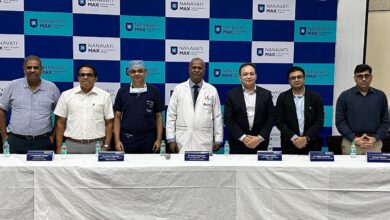
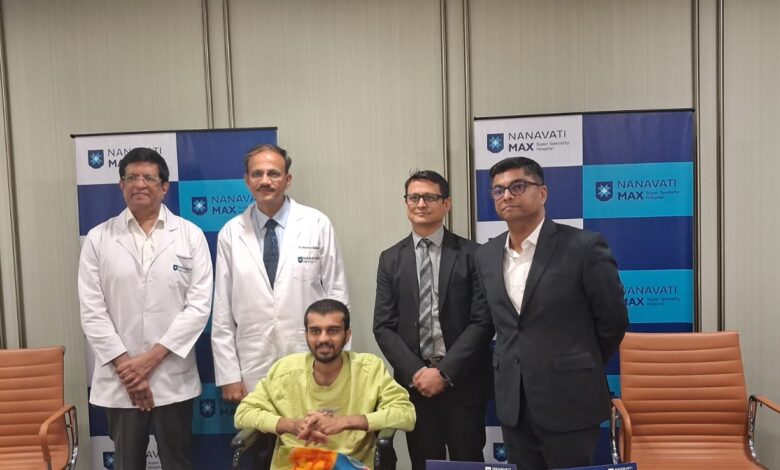
A multidisciplinary team led by Dr. Nilesh G Satbhai, Director – Plastic, Reconstructive Microsurgery & Hand Transplantation, Nanavati Max Super Speciality Hospital, Mumbai and Dr. Gautam JK Tawari, Senior Director – Arthroscopy & Sports Medicine, Upper Limbs (Shoulder & Elbow) & Hand Surgery, Nanavati Max Super Speciality Hospital, Mumbai, performed the emergency replantation and subsequent reconstructive procedures. The surgery involved repairing the damaged blood vessels, nerves and muscles to reconnect the amputated foot and restore circulation. The severity of the injury and the extensive tissue loss made the procedure particularly challenging.
Elaborating on the case, Dr. Nilesh G. Satbhai, said, “The complexity of this case lay not only in reattaching a completely amputated foot but also in repairing the extensive damage to the surrounding skin and soft tissues. Our first priority was to restore blood circulation by reconnecting the damaged blood vessels and nerves. We then transferred healthy tissue from the patient’s thigh to cover the injured area and protect the underlying structures. Our objective was to preserve the foot and give the patient the best possible chance of recovery and regaining mobility.”
The doctors subsequently performed procedures to stabilise the foot and cover the remaining wounds using skin taken from the patient’s thigh. Advanced treatment modalities such as dermal substitutes and laser therapy were also used to support tissue growth and wound healing.
Dr. Gautam J.K. Tawari, said, “Managing such complex injuries requires close coordination between different surgical specialties, with each team playing an important role in the patient’s recovery. After successfully reattaching the foot, our focus was to ensure that it healed properly and achieved the stability needed for future movement. The patient will now undergo a carefully planned rehabilitation programme, with the aim of gradually regaining mobility.”
Following multiple surgeries and nearly a month of hospitalisation, the patient was discharged in a stable condition. He is currently recovering at home and is expected to begin mobilisation under medical supervision.
The case highlights Nanavati Max Super Speciality Hospital’s commitment to delivering timely, specialised care for complex traumatic injuries through advanced reconstructive microsurgery and close coordination between medical specialities. It also demonstrates how a multidisciplinary surgical approach can help preserve limbs that might otherwise require amputation.
About Max Healthcare:
Max Healthcare Institute Limited (Max Healthcare) is one of India’s largest healthcare organizations. It is committed to the highest standards of clinical excellence and patient care, supported by latest technology and cutting-edge research.
Max Healthcare operates 21 healthcare facilities (~6,200 beds) with a significant presence in North India. The network consists of all the hospitals and medical centres owned and operated by the Company and its subsidiaries, partner healthcare facilities and managed healthcare facilities, which includes state-of-the-art tertiary and quaternary care hospitals located at Saket (3 hospitals), Patparganj, Vaishali, Rajendra Place, Dwarka, Noida and Shalimar Bagh in Delhi NCR and one each in Lucknow, Mumbai, Nagpur, Mohali, Bathinda, Dehradun, and Bhubaneswar, secondary care hospital in Gurgaon and medical centres at Noida, Lajpat Nagar and Panchsheel Park in Delhi NCR, and one in Mohali, Punjab. The hospitals in Mohali and Bathinda are under PPP arrangement with the Government of Punjab.
In addition to the hospitals, Max Healthcare operates homecare and pathology businesses under brand names Max@Home and Max Lab, respectively. Max@Home offers health and wellness services at home while Max Lab provides diagnostic services to patients outside the network.