

Mumbai doctor saved the Life 14-year-old boy from Eritrea battled Burkitt’s lymphoma
His recovery was made possible through the combined efforts of the Paediatric ICU,

POSTED BY : ANAGHA SAKPAL DATED ON 15/09/2026 (9004379946)
A critically ill 14-year-old boy from Eritrea battled Burkitt’s lymphoma, secondary HLH, cardiac arrest and multidrug-resistant sepsis, ultimately completing treatment and returning home healthy.
Mumbai (RMN) : A 14-year-old boy from Eritrea presented with fever and progressive abdominal distension for two months. For a month before coming to India, he had required blood transfusions to support his haemoglobin and platelet counts. He was initially admitted to a paediatric ICU in Mumbai, where a mass in the ileocecum was identified and biopsied. His condition continued to deteriorate, and he was transferred to Narayana Health SRCC Children’s Hospital on 7 May 2026.
At admission, the boy was critically ill, with drowsiness, respiratory distress, a large abdominal mass and hypotensive shock. He required ventilatory and inotropic support and was immediately admitted to the Paediatric ICU. The referral biopsy confirmed Burkitt’s lymphoma, although formal staging could not initially be performed because of his critical condition.
Cytoreductive chemotherapy with cyclophosphamide, vincristine and prednisolone was started to reduce the tumour burden. Bone marrow examination revealed haemophagocytic lymphohistiocytosis (HLH), a severe immune disorder, without evidence of lymphoma involvement.
Dr Kriti Hegde, Consultant, Paediatric Oncology, Haemato-Oncology & BMT, Narayana Health SRCC Children’s Hospital, Mumbai said On Day 4, he developed pulseless ventricular tachycardia leading to cardiac arrest but was successfully revived after one round of CPR. He subsequently developed multidrug-resistant Gram-negative Klebsiella sepsis, adding another life-threatening complication. Despite these challenges, the tumour began shrinking by the second week, his clinical condition improved and he was eventually extubated.
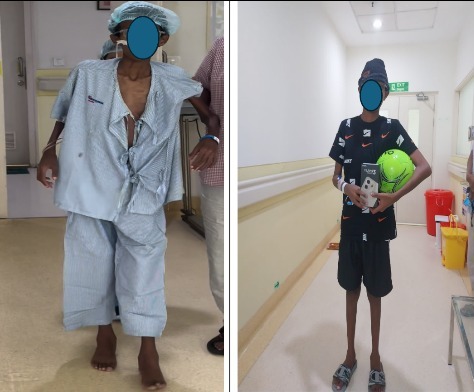
His recovery was prolonged. He had lost 12 kilograms, with severe muscle wasting and profound weakness. At his weakest, he was unable to speak or sit even with support. Alongside cancer treatment, he required intensive physical and nutritional rehabilitation. Physiotherapists worked to rebuild his strength, while Cuddles Foundation provided nutritional support.
As his condition improved and he gained weight through enteral nutrition, doctors were able to complete chemotherapy as per protocol. He was ultimately diagnosed with Stage III Burkitt’s lymphoma with secondary HLH, rather than the initially presumed Stage IV disease. He completed five cycles of chemotherapy and achieved metabolic remission after the third cycle.
During his final cycle, he developed measles, posing additional risks because of his immunocompromised state. Early recognition and prompt management helped him begin recovering by Day 8.
The boy has since completed treatment and returned home in good health. His journey—from a critically ill child in shock and respiratory failure to one who was eventually able to walk again—highlights the importance of coordinated, multidisciplinary care.
His recovery was made possible through the combined efforts of the Paediatric ICU, Paediatric Oncology, Physiotherapy, Nutrition and Infection Management teams. The case is a powerful reminder that in complex paediatric cancer care, successful outcomes are built through teamwork, persistence and coordinated care.