

Advanced Wireless Pacemaker Technology Marks a New Chapter in Cardiac Care at Apollo Hospitals Navi Mumbai
Permanent pacemaker implantation remains the definitive treatment for symptomatic bradycardia.

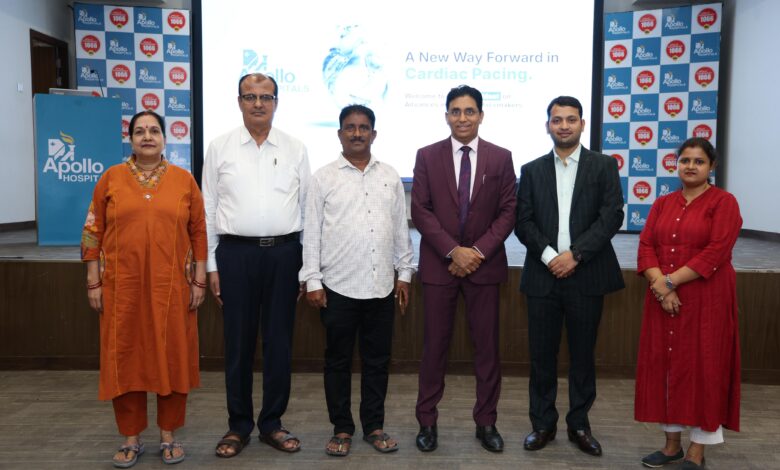
POSTED BY : ANAGHA DATED ON 02/07/2026 (9004379946)
Navi Mumbai (RMN.COM) : Apollo Hospitals Navi Mumbai has crossed an important milestone in wireless or leadless pacemaker implantations, reflecting the growing adoption of this next-generation technology for appropriately selected patients and the hospital’s continued commitment to advanced cardiac interventions.
As India’s population ages and cardiovascular disease becomes increasingly prevalent, cardiologists are witnessing a steady rise in patients presenting with symptomatic bradycardia, a condition in which the heart beats too slowly to adequately meet the body’s needs. While conventional pacemakers have remained the standard of care for decades, recent advances in heart rhythm management are enabling treatment to become safer, less invasive, and more patient-friendly through the use of leadless pacemakers.


Unlike traditional pacemakers, which require a surgical pocket beneath the skin and insulated leads threaded through veins into the heart, a leadless pacemaker is a miniature device implanted directly into the heart through a catheter introduced via a small puncture in the vein near the groin. Approximately 93% smaller than conventional systems, it eliminates the need for chest incisions, visible device pockets, and pacing leads, the components responsible for many long-term complications associated with conventional pacemakers.
Although India does not yet maintain a national registry for symptomatic bradycardia, clinicians across the country report a growing burden of the condition. This increase is being driven by an ageing population, improved survival following heart attacks, rising rates of hypertension, diabetes, and coronary artery disease, as well as wider access to electrocardiography, Holter monitoring, and specialised electrophysiology services that enable earlier diagnosis.
Symptomatic bradycardia may arise due to age-related degeneration of the heart’s electrical conduction system, heart attacks, or certain medications. Patients often present with persistent fatigue, dizziness, breathlessness on exertion, fainting episodes, or unexplained falls. Left untreated, severe bradycardia can significantly increase the risk of injury, heart failure, and, in some cases, sudden cardiac death.
Permanent pacemaker implantation remains the definitive treatment for symptomatic bradycardia. However, advances in device technology have significantly transformed how pacing therapy can now be delivered in suitable patients.
Commenting on the evolution of heart rhythm management, Dr. Sanjeevkumar Kalkekar, Senior Consultant – Interventional Cardiology at Apollo Hospitals Navi Mumbai and National Proctor for Leadless Pacemaker Technology in India, with experience of more than 110 leadless pacemaker implantations across the country, said:
“Pacemakers have saved countless lives for more than half a century. What has changed today is not the need for pacing, but how we deliver it. Leadless pacemakers allow us to offer the same life-saving therapy while avoiding many of the challenges associated with conventional leads and surgical pockets. For appropriately selected patients, this translates into a lower risk of infection, fewer device-related complications, faster recovery, and greater comfort after the procedure.”
Because leadless pacemakers eliminate transvenous leads, they substantially reduce the risk of lead fractures, lead displacement, venous obstruction, and pocket infections. Modern devices are MRI compatible, have an expected battery life of approximately 12 to 18 years, and, in most cases, allow patients to return home within a day of implantation with minimal restrictions on routine activities.
The technology has proven especially valuable for patients who are at higher risk of infection, including those undergoing long-term dialysis, individuals with previous pacemaker infections, patients with limited venous access, and elderly or medically frail individuals for whom minimising procedural risk is particularly important.
Apollo Hospitals Navi Mumbai remains committed to bringing the latest evidence-based innovations to patients, ensuring that heart rhythm disorders are treated not only effectively but also with greater safety, comfort, and confidence.