
Maharashtra Stroke Summit Charts Roadmap to Strengthen Stroke Care and Improve Patient Outcomes
Improve Patient Outcomes

POSTED BY : MRUNALI SAKPAL DT. 07/03/2026 📞 8850212023
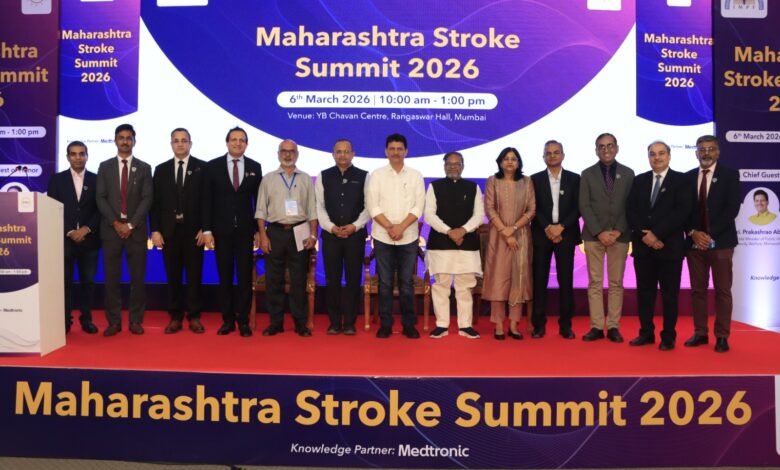
MUMBAI RMN.IN(E) : The Indian Medical Parliamentarians’ Forum (IMPF) today hosted the Maharashtra Stroke Summit in collaboration with the European Business Group and supported by Medtronic as the knowledge partner.
Stroke ranks as the fourth leading cause of death and the fifth leading cause of disability in India. In Maharashtra, the burden is particularly concerning, Maharashtra ranks amongst the top 10 states in India with respect to deaths and disability due to stroke. These figures underscore the urgent need for heightened public awareness, timely diagnosis, and the strengthening of critical care infrastructure to ensure prompt and effective treatment for stroke patients.
Despite notable technological advancements in stroke care driven by public–private partnerships, significant challenges persist. In India, generally many stroke patients reach hospitals too late due to low awareness of warning signs, a lack of stroke trained doctors and facilities, limited use of proven treatments, and high treatment costs that put care out of reach for many families.The forum covers key discussions on ‘Clinical evidence in stroke management in India ‘(ICMR & PRAAN study) by Dr. Neeraj Jain, HOD, KEM Hospital and ‘Impact of inclusion of stroke treatment under MJPJAY and support needed’ by Dr. Nitin N. Dange, Professor & Unit Head, KEM Hospital. The forum focused on critically examining existing gaps in stroke care delivery and exploring sustainable solutions. Key areas of discussion included strategic approaches to establishing and strengthening stroke centers to ensure timely, effective, and equitable access to high-quality care.
On the occasion, Shri Prakashrao Abitkar, Hon. Minister of Public Health and Family Welfare, Government of Maharashtra said, ‘’ Stroke remains one of the leading causes of mortality and long-term disability, not only in India but across the globe. Recognizing its profound public health and socioeconomic impact, the Government of India has undertaken a transformative step by incorporating comprehensive stroke care packages under the Ayushman Bharat scheme. These packages encompass critical interventions such as thrombolysis, management in dedicated stroke care units, and mechanical thrombectomy. This strategic inclusion marks a significant milestone in strengthening the nation’s healthcare architecture. By expanding access to advanced, time-sensitive stroke therapies and reducing the financial burden on patients and their families, the initiative reinforces the principles of equity and affordability in healthcare delivery.’’
Dr. Anil Bonde, Member of Rajya Sabha and Chairperson, Indian Medical Parliamentarians’ Forum said, ‘’The Maharashtra Stroke Summit marks an important step toward building a more responsive and equitable stroke care ecosystem in our state. Stroke remains one of India’s most pressing public health challenges, and the growing burden—particularly in urban centres like Mumbai—demands urgent, coordinated, and systemic action. While advancements in technology and clinical capabilities are encouraging, we must collectively address persistent barriers and focus on developing sustainable, scalable solutions that strengthen stroke-ready networks, expand access to time-sensitive therapies, and ensure that every patient—irrespective of geography or economic status—receives timely and high-quality care.’’
Prateek Tiwari, Senior Director, Neuroscience and Specialty Therapies, Medtronic India said, ‘’Public–Private Partnerships (PPPs) represent an effective and sustainable model for advancing stroke management across Maharashtra. By enabling greater awareness, ensuring rapid turnaround times, delivering high-quality clinical care, and leveraging strong technological capabilities, PPPs can significantly strengthen stroke care systems at the state and national level. These efforts are instrumental in ensuring optimal patient outcomes and enhancing the overall quality of stroke care delivery.’